Kendo and ADHD
For an ADHD-haver, I'm surprised that I'm still doing Kendo after so many years
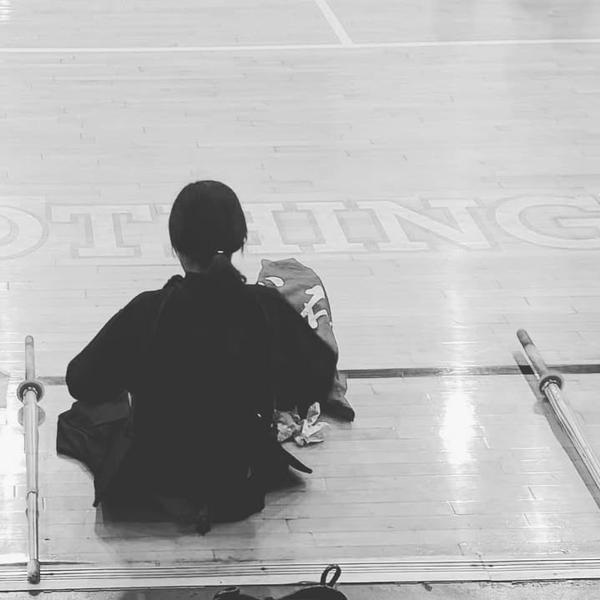
On a random afternoon, I met up with people from the local yoyo community at SM Megamall. I first got into yoyoing as a kid, and back then I only bought from Auldey, which made cheap but decent starter yoyos. It was a hobby I revisited when I was finally a young adult with money of my own. To learn from other people, I integrated myself into the local yoyo community. At that random meetup, I met Yuta. He was still in college at the time, and the others mentioned that he was a Kendoka. Learning that Yuta practiced Kendo surprised me. I didn’t know there was a Kendo dojo here in Metro Manila. Before I revisited yoyoing, I had actually tried Aikido for a few sessions, but I let it go because the dojo was a bit far from my home and work.
So I checked out his dojo, Metro Kendo Club, and the rest was history. I’ve practiced Kendo since 2018, with a few years of hiatus due to the pandemic and some life-altering events in my personal life.
I had (and still have) so many hobbies, and despite some unavoidable years away, I’m still in Kendo. That surprises me, as someone diagnosed with ADHD.
Having many hobbies is common for people with ADHD, because our brains crave novelty and dopamine. I don’t really “quit” any of my hobbies, I rotate them. I’ll put some of them “on a shelf” for a while, then come back months later. That has been the pattern with digital illustration, coding, playing an instrument, calligraphy, yoyoing, motorcycling, and more. Out of all of these, Kendo is the only one I’ve done consistently. I wrote this to try to understand why, and why Kendo has turned out to be the best activity for me as someone with ADHD.
Kendo is always full of novelty and challenges
With most hobbies, the novelty eventually runs out for me. I hit a plateau and my brain starts looking for the next shiny thing. Kendo never reaches that point, because there is always another layer underneath the one I just learned.
At first, everything is new: how to hold the shinai, how to step with suriashi, how to do suburi. Then you get your bogu, then you learn that the men strike you thought you had down is actually so many different things: your left hand, your hips, your kiai, your timing, your distance, and ki-ken-tai-ichi tying it all together. The challenge also changes every single keiko. No two opponents fight the same way. A sensei will read your habits in seconds and punish them. A beginner will move in ways you don’t expect. Even the same person feels different from one practice to the next. For an ADHD brain, that constant variety is the dopamine, without needing to switch hobbies to get it.
And there is always a next step to aim for. The grading system gives you a long road of kyu and dan ranks, each with its own expectations. Getting my shodan years ago didn’t feel like the “end goal”. It felt like being told, “Okay, now you can really start.”
Structure that holds me without boxing me in
ADHD makes it hard to build structure from scratch and stick to it. I can plan a routine perfectly and abandon it in a week. Kendo gives me structure I don’t have to invent or maintain myself. Every practice follows a structure. We bow in, warm up, do suburi, put on bogu, run kihon drills, move into waza and kakari-geiko, then jigeiko, then bow out. At this early stage, I don’t have to decide what to do next, the keiko led by the sensei decides for me. That takes away the executive-function load that usually makes me drop things.
The schedule helps too. Training on select practice days gives my week fixed anchors. I don’t have to remember to go, I just have to pack up and book a ride. Unlike the gym where I always try to find an excuse to just do it the next day, I don’t have that luxury in Kendo. I have to do to the scheduled days, else the next one would feel too far away in the week and my body will have to adjust again.
No room for a wandering mind
My mind is rarely in one place. Even when I’m doing something I enjoy, part of me is somewhere else: a work problem, a half-finished idea, a song stuck on loop, a random Tiktok vocal stim. Kendo is one of the few places where that noise goes quiet. It has to. When someone is in front of you with a shinai, a moment of distraction gets you hit. You have to watch their kensen, their feet, their breathing, and the distance between you, all at once. There is no spare attention left over for the usual mental chatter.
The physical intensity matters too. Kendo is loud and demanding: kiai, fumikomi, wearing heavy bogu in Manila heat. By the end of keiko, my body has burned off the restlessness that usually stays with me all day. I come out tired, but my head feels clear in a way it rarely does otherwise.
You can’t do Kendo alone
Most of my hobbies are solitary. I can draw or code by myself, which also means I can stop by myself, and nobody notices. Kendo doesn’t work that way. You need a partner to strike, a motodachi to receive, and sensei to correct you. That makes the dojo a kind of accountability I never had to set up. People expect to see you. When you miss a few sessions, someone asks where you’ve been. When you show up, someone is waiting to practice with you. External accountability is one of the most reliable ADHD supports, and the dojo gives it to me effortlessly.
It’s also just a good community. Metro Kendo Club became a group of people I’ve trained, sweated, and grown with for years. I stay partly for Kendo itself, and partly for them.
Kendo welcomes you back
One of the hardest parts of ADHD is the guilt of stopping. When I shelve a hobby, coming back can feel like admitting I failed at it. With Kendo, I stepped away for years because of the pandemic and things in my life I couldn’t control. I expected coming back to feel like that. It didn’t. Kendo is built as a lifelong practice. People start in their fifties, take breaks for work or family, and return. Nobody in the dojo treated my hiatus as quitting. I put my bogu back on and I simply continued. I think this is part of why it stuck. Kendo doesn’t demand that I never stop. It only asks that I keep returning, and that’s something my ADHD brain can actually do.
Why Kendo stuck
Looking back, Kendo gives me almost everything my ADHD brain needs in one place: endless novelty, structure I don’t have to build, a reason to be fully present, and a door that stays open when I drift away. I still rotate my other hobbies, and I’ve made peace with that. But Kendo has become the constant among them. It’s not that I found the discipline to stick with something. It’s just that I found something that meets me where I am, and keeps asking me to come back to the dojo and start again.
After stopping 2020-2022 due to the pandemic, 2023 because of personal reasons, a failed attempt to return at 2024 because I got a head injury and had to pause again and recover, I made a full comeback at Kendo around early 2025, just in time after Metro Kendo Club changed to its now present name. I started 2018, but in my head, I’ve only been doing this for more or less than 3 years cumulatively. I would say I loved it more than I ever did in the previous years.
If you have ADHD and you’ve been told you “can’t commit to anything,” maybe you just haven’t found the thing that commits back. For me, it was Kendo.